Filter
Clay Type
- Porcelain (27)
- Stoneware (96)
- Earthenware (15)
- Casting Slip (25)
- Dry Clay (7)
- Self Hardening/Modeling (9)
- Specialty (26)
Firing Range
Clay Color
- Brown (59)
- Terra-cotta (22)
- Tan/Grey (72)
- White (85)
- Black (12)
- Blue (3)
- Red (24)
- Orange (3)
- Yellow (2)
Craft
- Throwing Bodies (127)
- Sculpture/Handbuilding (123)
- Slip Casting (25)
- 3D Printing (1)
- Raku (5)
Clay
 Amaco Clay
  Axner Clay
  The Ceramic
Shop Clay
 Casting Slip
  IMCO Clay
  KY Mudworks
Clay
 Laguna/Miller
Clay
 Sio2 Clay
  Standard Clay
  Polymer Clay
  Specialty Clay
  Full Pallet
Pricing
 Sample Sets
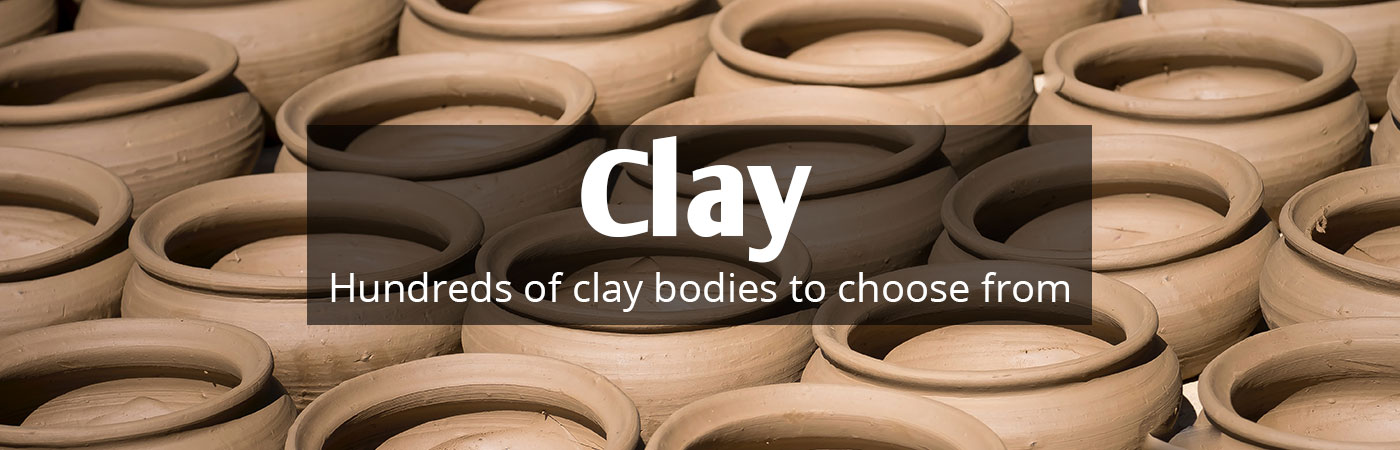
From stoneware to low-fire, we have you covered for all types of claybodies. As a major national supplier, we carry clays from all of the major distributors. If you are new to ceramics and not sure what clay might be the one for you, or if you are a ceramics instructor who has to select a clay for your classroom, our experienced staff will be happy to recommend a great product that will fit your projects and your needs.
We carry clay by all of the major distributors, including Amaco, Miller/Laguna, and Standard. We can easily handle large orders for schools or universities, but we can also sell small quantities of clay, as well! If you are interested in trying out a new claybody, we sell almost all of your clays in 25-lb. bags; we also sell in bulk, too, if you are stocking your university department for the semester or preparing for a busy upcoming show season. Most of our clay comes with bulk discount pricing, too, so the more you buy, the less expensive your per-pound price is! Please note that most clay prices displayed are per pound, and must be purchased in 25-lb. increments. Most price breaks occur at 50 lb, 250 lb, 500 lb, and 1000 lb increments.
High Fire Stoneware Clay (Cone 10)
Earthen-colored stoneware clays produce durable ware and most will react favorably to the manipulation of air, gas and smoke in reduction firing. These clays have good plasticity and will perform well in both wheel throwing and hand building methods.
High Fire White Stoneware Clays (Cone 10)
High fire white stoneware clays also have good plasticity and contain a small amount of sand to increase their strength and workability, making them slightly open when fired. These clays have become very popular because of the clean canvas they provide for a myriad of glaze colors. Some iron speckling can occur but for the most part, glaze colors are not affected.
Midrange Stoneware Clays (Cone 4-6)
Midrange stoneware clays are similar to cone 10 clays in their workability and represent potential savings in lower firing costs. The lower firing temperature and oxidation atmosphere allow for the use of a large palette of ceramic stains and cause less warping of the ware.
Porcelain Clay (Cone 6-11)
Porcelains are most commonly known for their whiteness and for having some degree of translucency. They are pure and vitreous which gives them their inherent glaze fit quality and unparalleled hardness and durability.
Low Fire Earthenware Clay (Cone 06-04)
Low fire clay tends to be either reddish or white in color. These clays tend to be more porous, making them ideal clays for planters. Glazing is required to create a waterproof surface. When fired, these clays are non-vitreous and have low shrinkage. Low fire dinnerware does not take extremely hot temperatures well, and repeated exposure to such temperatures can result in cracking and crazing.
Paper Clays
Paper Clay is a combination of paper pulp and clay that has the benefit of strength that aids in the safe transport of work and reduces breakage of larger pieces. Water transporting fibers make slip joined dry-to-dry additions successful and also aid to reduce warping and cracking of tiles, slabs and during force drying. Paper clays are made in small batches and can be special ordered through The Ceramic Shop.
Non Firing Clay
These Clays are designed not to be put in the kiln and are intended for sculpture or decoration, not dinnerware. Non firing clay comes in self hardening (or air dry) that dry to be super stiff without a kiln firing. Modeling Clays keep their softness and can be reused over and over again for mold making or kids projects.
Dinnerware/ Tableware
Functional ware is considered objects like bowls or mugs that will be holding foods or liquids. There are a wide variety of different types of clays ranging from dark stoneware to smooth white porcelain or slightly grogged textured clays that are suitable as long as they have a low water absorption rate. For stoneware clays look for a claybody with less than 3% absorption and for porcelain look for less than 1%.
Ovenware
Many stoneware clays will work well for ovenware, but clays that can handle the thermal shock of low to high temperatures work best. Cone 5 stonewares tend to be less susceptible to thermal shock but all ovenware made of stoneware should be heated and cooled gradually. Selecting a glaze that fits well and can also withstand the heating and cooling changes is necessary and may take some testing to figure out what works best.
Floor and Outdoor Tile
Tiles should be made from a strong, durable clay to withstand wear and tear and changes in temperature. Commercial producers employ special production techniques to increase the durability and provide lower shrinkage. You'll want to select a tile with grog for floor tiles and clays with low absorption rates (2% or less) for outdoor tiles. Glazing outdoor tiles and using a cover sealant will help protect your tiles from the thermal shock of changing weather.
Sculpture Clays
Sculpture claybodies contain significant amounts of sand and grog in various mesh sizes and are formulated for a low rate of shrinkage. These clays are designed to accommodate large hand built, wheel thrown or sculpted projects.
Atmospheric Clays
Atmospheric clays including raku, woodfire, salt fire, and reduction must be durable to withstand the thermal shock or changing temperatures. They should also have good flashing properties if used for woodfiring, salt firing, or reduction.
203 products in this department, displaying products 1 to 50.