
Frits are important components in many ceramic glazes. A frit is a type of manufactured glass that contains the main components for a complete glaze. They are industrially produced by combining raw materials and heating them to their melting point then rapidly cooled. This process can help to stabilize the raw materials to eliminate properties like solubility in water, or volatility during heating. Often frits can be used alone as glazes themselves, or as bases to add colorants and stains.
Because of their various applications, there are numerous types of frits, each with specific chemistries and uses. Since they are specialized, frits tend to be more reliable than raw materials when it comes to consistently reproducing glazes.
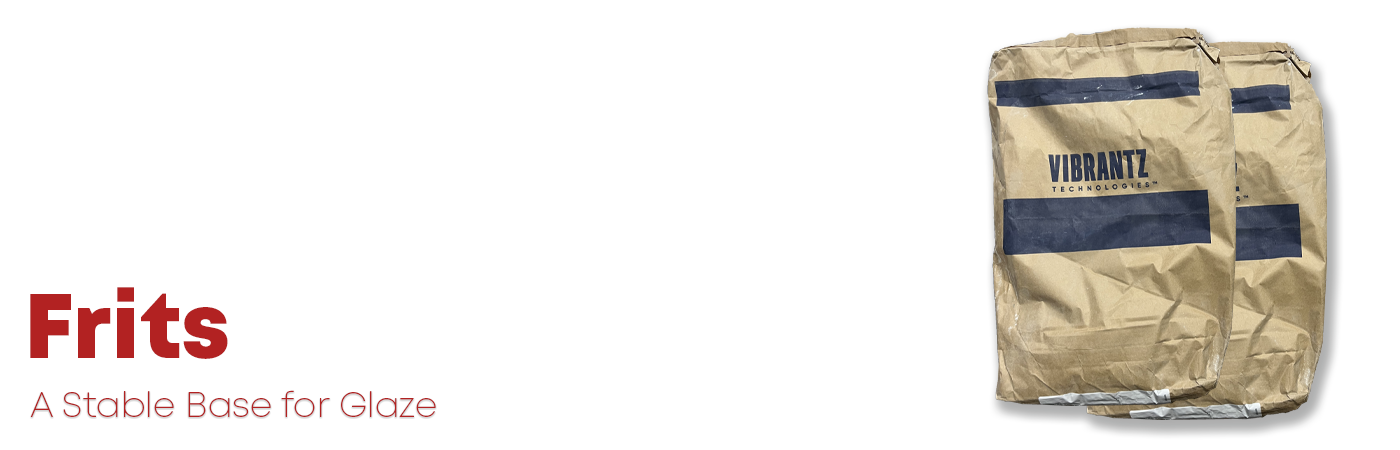
The frit producer Ferro and several other companies merged to form Vibrantz Technologies in 2022. In 2024 you will slowly start to see the branding on frit bags reflect this. Whether they are labeled as Ferro or Vibrantz, the numbers will correlate and the frit inside will still be as reliable as ever!