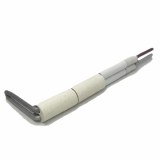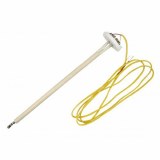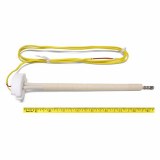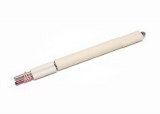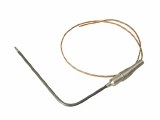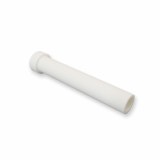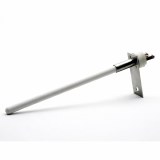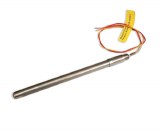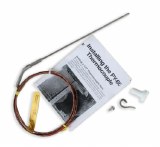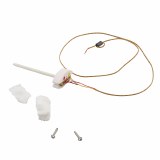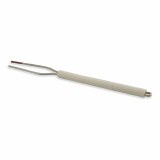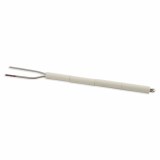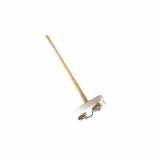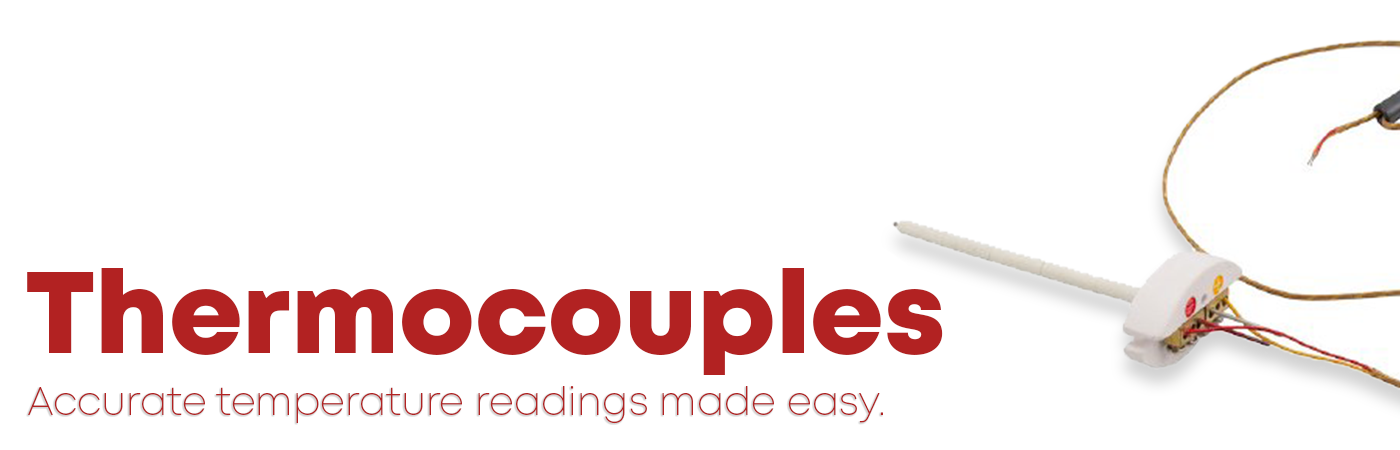


Thermocouples serve as temperature sensors during firings. Thermocouples are found on the inside of the kiln and extend out from the kiln walls, into the interior space of the kiln, where they detect temperature changes. There are two general types of thermocouples used in ceramics: Type-K thermocouples and Type-S thermocouples.
Type-K thermocouples are the most commonly used thermocouples. They are relatively inexpensive, strong and durable. Type-K thermocouples function over a temperature range of -300°F to around 2300°F, so they fit the needs of the majority of ceramicists. A Type-K thermocouple is made up of two dissimilar metals: alumel and chromel. Where the two metals meet, they are welded together to form the tip of the thermocouple, which is where the heat in your kiln is sensed. When heated, the two alloys produce a voltage proportional to a temperature difference, between either ends of the metal conductors. In short, these two metals heat at different rates, and by comparing that difference, a true temperature is defined. The chromel metal is referred to as positive, and designated with a yellow + symbol; the alumel metal is negative and marked with a red - symbol. Keeping this polarity connected correctly through the thermocouple wire and to the kiln controller is critical. A reversed thermocouple can appear to read backwards, which means your temperature indicator will go down, and/or, it may simply read as an error. If your thermocouple or thermocouple extension wire ends are not color coded you can easily tell the difference with a magnet. The positive wire (yellow) is non-magnetic while the negative (red) is magnetic.
Type-S thermocouples are quite rare and are only used in a small number of kiln models. Kilns that require S-type thermocouples are typically used in high temperature (cone 10) applications and crystalline glaze firings, which require long hold times. These thermocouples can withstand these firing conditions more readily than Type-K thermocouples. Types-S thermocouples are considerably more expensive because they use platinum and rhodium metals. Their life is much longer than Type-K thermocouples, and depending on usage, may not need to be replaced at all.
It is important to recognize when your thermocouple needs to be replaced to avoid inaccuracy in temperature readings. As thermocouples age, their accuracy declines and temperature readings will be off. If this is the case, it is time to change your thermocouple. You accurately test the temperature of your kiln during firings by using self-supporting, or “witness” cones.
Purchasing a thermocouple is not as difficult as it may seem. Many thermocouples are interchangeable among kilns. However, it is important to know the length and diameter of the thermocouple you need. The length is determined by the thickness of a kiln’s wall, and the diameter is the insertion point of the thermocouple in your kiln. Often you will find thermocouples protected in a porcelain sleeve (like on Skutt kilns) or in a tube, as in the case of L&L kilns. Thermocouples can come braided, as with the thermocouples for Amaco front loaders, and Olympic and Paragon kilns sometimes use a metal sheath over the thermocouple.
We carry thermocouples for all kiln models that we sell. Most are available with and without thermocouple mounting blocks.